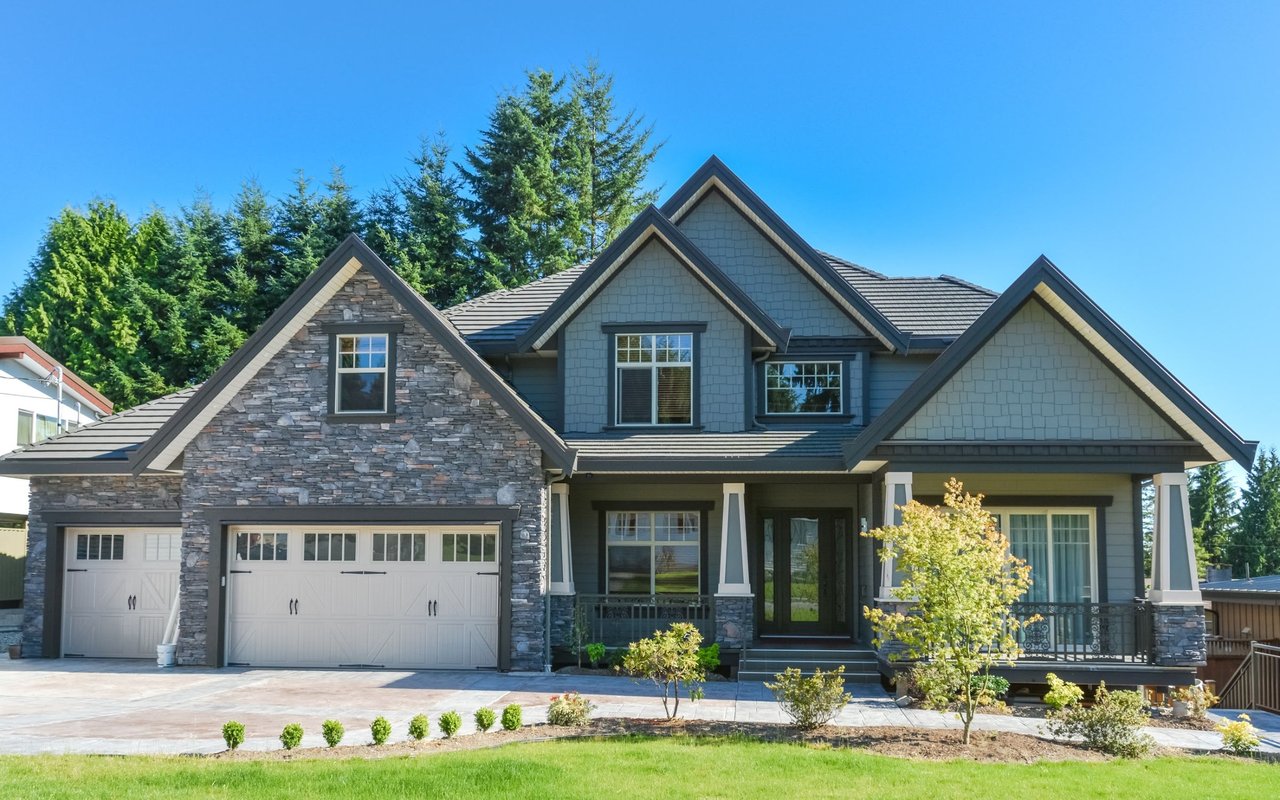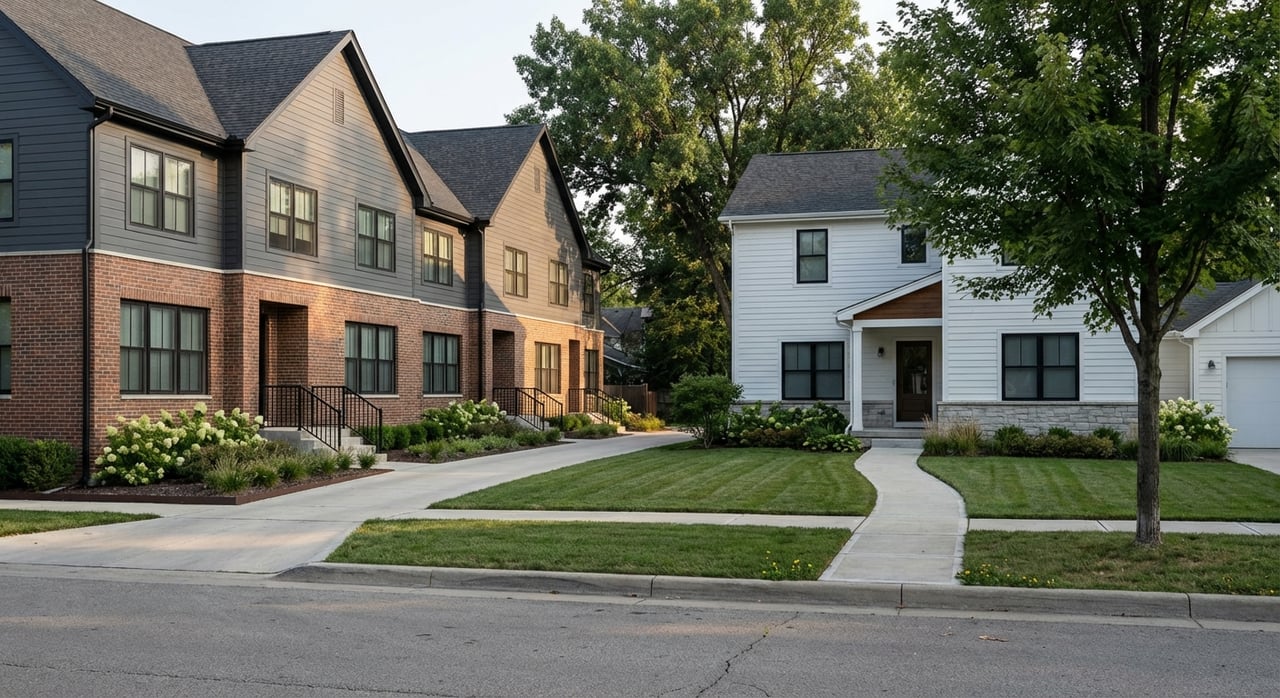
Trying to choose between a townhome and a single-family home in Woodbury? You’re not alone. Budget, space, maintenance, and lifestyle all play a role — and the right answer depends on how you live day to day. In this guide, you’ll compare real monthly costs, upkeep responsibilities, typical layouts, and resale considerations, plus local insights that matter in Woodbury. Let’s dive in.
Woodbury market snapshot
Townhomes in Woodbury typically offer a lower entry price than detached homes. Market aggregates often show townhome medians in the low to mid $300,000s and single-family medians in the mid $500,000s. New construction reflects that split too, with many builders offering townhomes in the low to mid $300,000s and single-family homes starting in the $500,000s and above. You can browse examples of current builder offerings on resources that track new-home communities in Woodbury.
When you compare options, look beyond the sticker price. Your monthly payment, taxes, HOA dues (if any), utilities, and maintenance reserves create the real cost picture.
Cost comparison: what you actually pay
Purchase price and HOA dues
- Townhomes usually cost less upfront. The tradeoff is a monthly HOA fee. In the Twin Cities region, many townhome HOAs fall roughly in the 200 to 500 dollars per month range, often centering around 300 to 450 dollars depending on services and amenities. See what typical dues cover in this Minnesota HOA fee overview.
- Single-family homes avoid mandatory HOA dues in most cases, but you carry all exterior costs yourself. That can mean a higher and more variable monthly outlay for maintenance and utilities.
Property taxes and local levies
- Property taxes in Woodbury depend on assessed value plus the combined levies from the city, county, schools, and special districts. The city explains how taxes are billed and offers links to county tools on its Property Taxes page.
- Local levies can shift your bill even if your assessed value stays similar. Recently, the Woodbury city council approved a 2026 levy increase; in local reporting, the city portion represented about 26 percent of a typical property tax bill. You can read that context in this coverage of the 2026 levy. Always check current figures before you finalize a budget.
A simple monthly budget framework
To compare a townhome and a single-family home side by side, total these items for each option:
- Mortgage principal and interest
- Property taxes (use the city/county estimator)
- HOA dues (townhome) or a monthly maintenance reserve (single-family)
- Homeowner’s insurance and utilities
You can also translate annual maintenance into a monthly number. More on that next.
Maintenance: who does what, and what it costs
Townhome maintenance
In many Woodbury townhome communities, the HOA handles exterior maintenance, common-area landscaping, and snow removal. Some associations also include exterior insurance and reserves for big-ticket items like roofs or siding. Coverage varies by community, so confirm the exact list of services before you buy. You may still pay special assessments for major projects if reserves are underfunded or issues arise.
Single-family maintenance
With a single-family home, you manage it all: lawn care, snow removal, exterior repairs, roof, driveway, and major systems like HVAC. A common planning range is to set aside about 1 to 4 percent of the home’s value each year for maintenance and repairs, adjusting higher for older homes or larger lots. You can learn more about this budgeting rule of thumb here: annual home maintenance cost range.
How to compare maintenance apples to apples
- Townhome: add HOA dues to your monthly budget. You may not need a large exterior reserve if the HOA funds these items, but set aside funds for interior upkeep and potential assessments.
- Single-family: add a monthly reserve based on the 1 to 4 percent annual rule. For example, if you plan 2 percent per year, divide that annual dollar amount by 12 to get a monthly reserve.
Space, layouts, and everyday living
Typical townhome layouts in Woodbury
You’ll commonly see 2 to 4 bedrooms and roughly 1,200 to 2,200 square feet, often across two or three levels with attached garages. Newer townhome lines may offer flexible spaces and a main-level bedroom suite option. Many communities include small patios or limited private yard areas. You can preview current floor plan styles within new-home community listings.
Typical single-family layouts in Woodbury
Detached homes often range from about 1,800 square feet on smaller lots to more than 3,000 square feet on family-sized lots. You’ll find larger yards, more storage, and greater flexibility for features like main-floor bedrooms and finished basements. New single-family product lines generally start at larger square footages and price accordingly.
Privacy, noise, and resale outlook
- Privacy and noise: Townhomes share at least one wall, which can affect privacy. End-units and quality construction can ease noise concerns. Single-family homes have no shared walls and typically provide more outdoor privacy.
- Resale demand: Detached homes often appeal to the broadest buyer pool in many markets, which can support strong liquidity. Townhomes can be slightly more niche but are popular with first-time buyers and downsizers. Market conditions and micro-location drive appreciation trends; national data shows many metro areas posting home price increases in recent periods, but you should rely on recent local comps when you buy or sell. For broad context, see this NAR summary of home price trends.
Amenities and location factors in Woodbury
Woodbury prioritizes parks, trails, and sports facilities like Carver Lake Park & Beach, off-road cycling at Carver Lake, the Tamarack Nature Preserve, and the HealthEast/Bielenberg Sports Center. Shopping hubs such as Woodbury Lakes and Tamarack Village add convenience. Get an overview from the city’s Community Profile.
Transit plans also matter, especially if you commute. The region’s long-range plans, including the METRO Gold Line BRT corridor, can change commute options and influence neighborhood desirability over time. You can review current planning context in the Met Council’s transit investment plan materials.
HOA due diligence checklist
If you are considering a townhome, review these items before you write an offer:
- Monthly fee and exact coverage: Exterior maintenance, snow removal, lawn care, exterior insurance, reserves, and amenities.
- Financials and reserves: Request the latest budget, reserve study, and financial statements. Are reserves healthy for roofs, siding, and pavement?
- Special assessments and litigation: Ask about any approved or pending assessments and open legal matters.
- Rules and restrictions: Understand rental limits, pet policies, parking rules, and how architectural changes are reviewed.
- Management and governance: Identify the management company, how rules are enforced, and owner voting rights.
Minnesota also provides help if issues arise. The state’s Common Interest Community Ombudsperson offers dispute-resolution resources and plain-language guidance for townhome and condo owners. Learn more from the Minnesota Department of Commerce’s CIC Ombudsperson office.
Taxes: how to estimate your bill
Your property tax depends on assessed value and combined levies. To estimate a specific Woodbury property:
- Look up or estimate market value for the home you’re considering.
- Use the city and county tools linked on the Woodbury Property Taxes page to model your expected taxes.
- Review any current-year levy changes or school referenda. These can shift your annual tax even if your property value is steady.
Which option fits your life stage?
- First-time buyers or price-focused buyers: Townhomes often provide the most affordable entry into Woodbury and reduce exterior chores. Make sure you review HOA coverage and reserves.
- Growing households seeking space and flexibility: Single-family homes usually offer more bedrooms, storage, yard space, and future options like additions or finished basements. If schools are a priority, confirm attendance boundaries for the neighborhoods you like.
- Downsizers or retirees: Townhomes often deliver low-maintenance living near parks, shops, and medical services. Look for single-level or main-level bedroom plans in well-managed communities.
- Investors: Townhomes can be easier to maintain if the HOA handles exterior work, while single-family homes can attract broad renter demand. Compare cap rates, HOA rental policies, and local rental regulations before you buy.
Putting it together: a quick decision guide
Choose a townhome if you value:
- Lower upfront price and predictable exterior upkeep
- Access to shared amenities and lower yard work
- A lock-and-leave lifestyle, especially in winter
Choose a single-family home if you value:
- A private yard, no shared walls, and flexible parking
- Freedom to modify and expand over time
- Broad resale appeal and room to grow
If you want help running the numbers on specific Woodbury listings — including HOA coverage reviews, estimated taxes, and maintenance planning — our team can guide you step by step and connect you with vetted vendors.
Ready to compare real options in today’s market? Reach out to Reidell-Estey & Associates for a local, data-informed plan tailored to your goals.
FAQs
What are typical HOA fees for Woodbury townhomes?
- Many Twin Cities townhome HOAs fall roughly in the 200 to 500 dollars per month range, often around 300 to 450 dollars, depending on what’s included; always verify the current fee and coverage for each community.
How do I estimate property taxes for a Woodbury purchase?
- Use the tools linked from the city’s Property Taxes page to model your bill based on assessed value and current levies, and review any recent city or school levy changes before finalizing your budget.
Do Woodbury townhome HOAs handle snow removal?
- Often, yes, but it varies; many associations include snow removal for common areas and sometimes driveways and sidewalks, so confirm the maintenance list in the HOA documents for each community.
How much should I budget for single-family maintenance?
- A common planning range is 1 to 4 percent of the home’s value per year, adjusted for age, size, and known repairs, divided into a monthly reserve you add to your housing budget.
What HOA documents should I review before buying a townhome in Minnesota?
- Ask for the resale disclosure, latest budget, reserve study, financials, meeting minutes, rules and regulations, and any notices of pending assessments or litigation, and confirm management and enforcement processes.